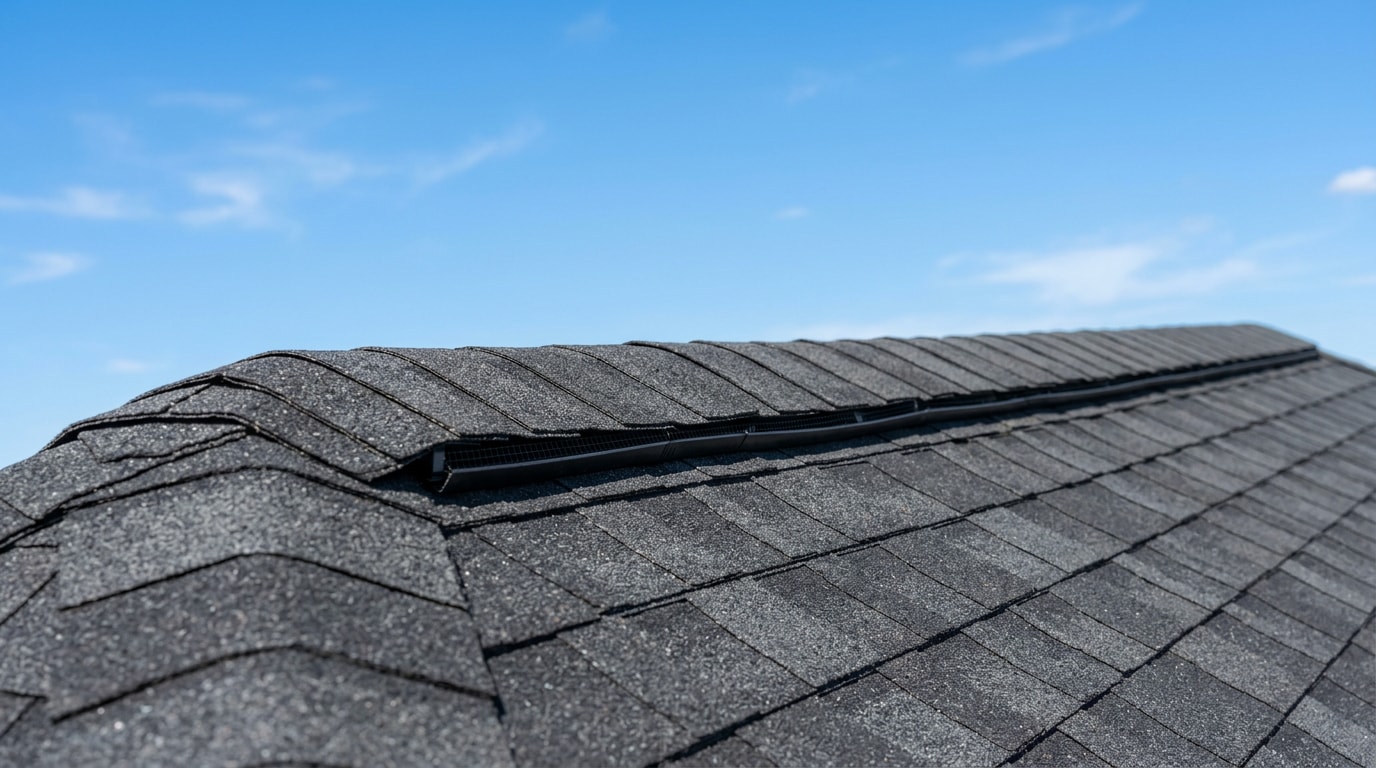
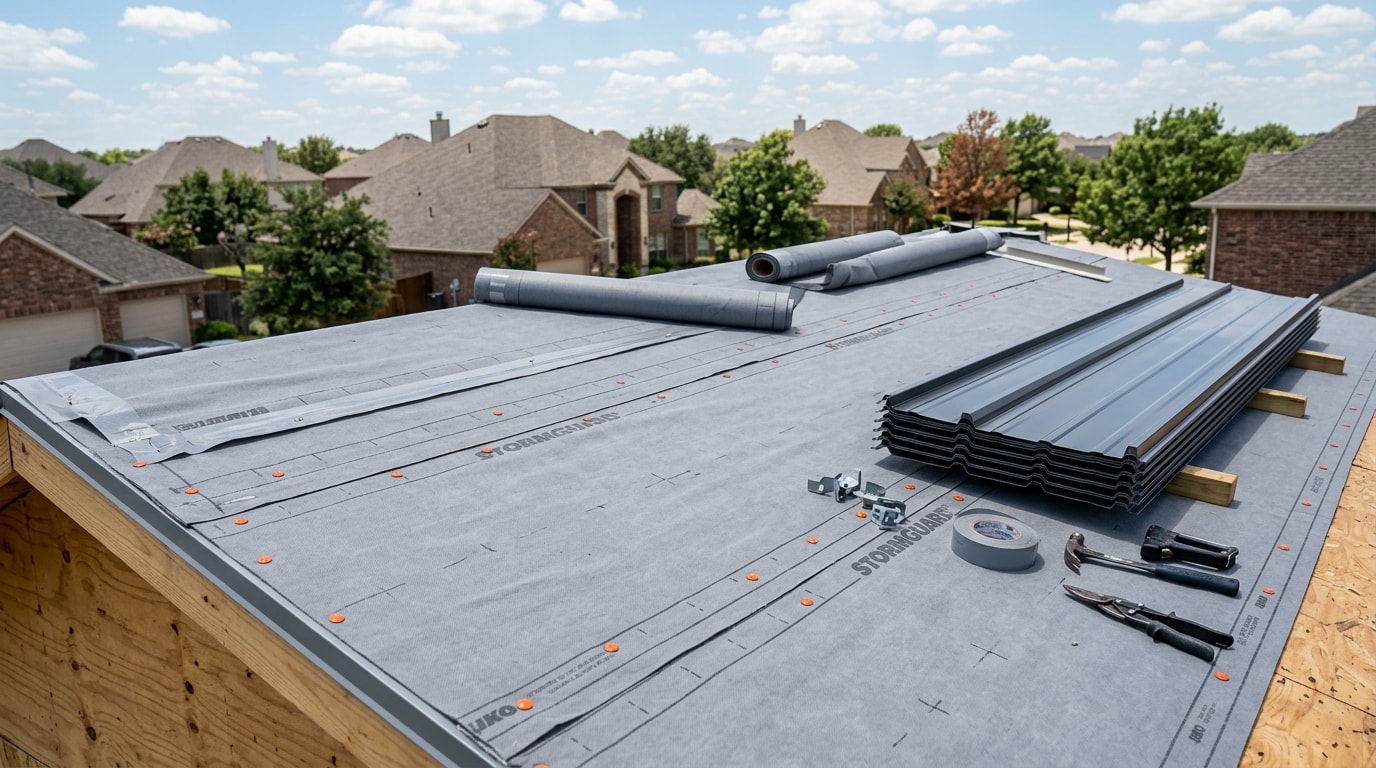
Metal roofing underlayment in The Woodlands, TX is the layer between your panels and the deck that decides whether your roof reaches its full lifespan or starts leaking early. Gulf Coast summers push roof-deck temperatures well past what cooler climates ever see, and that heat is exactly what breaks down a cheap or mismatched underlayment first. Here's what separates a product built for this climate from one that fails quietly under a roof that still looks fine from the ground.
What Metal Roof Underlayment Actually Does
Underlayment is the water-resistant sheet installed directly on the roof deck, under the metal panels. It isn't optional trim; it's a required part of the assembly.
The International Residential Code treats it that way too. Underlayment is required for asphalt shingles, clay and concrete tile, metal roof shingles, mineral-surfaced roll roofing, slate and slate-type shingles, wood shingles, wood shakes, metal roof panels, and building-integrated photovoltaic roof coverings, and it must conform to applicable standards.
On a metal roof specifically, the panels handle wind and sun, but the underlayment is what actually stops moisture at seams and fasteners, manages condensation, and protects the wood deck underneath. If it fails, you usually don't find out until there's a stain on the ceiling.
Why The Woodlands' Climate Raises the Stakes
Underlayment choice should be driven by climate first, budget second. The Woodlands sits in one of the more demanding zones in the country for this decision.
Summer afternoons here routinely push into the mid-90s. Houston's normal daily maximum temperature runs 94.5°F in July and 94.9°F in August, with a yearly average high of 80.5°F. Add direct sun on a dark metal panel and the underlayment underneath can see sustained heat that standard felt was never built to handle.
Humidity and rainfall compound the problem. Moisture that gets trapped between the deck and the panels has nowhere to go except into the wood, which is why a breathable, heat-stable membrane matters more here than in a drier climate.
These aren't abstract numbers. NOAA recalculates them for a reason: U.S. climate normals from NOAA cover temperature and precipitation averages for the last three decades, 1991 to 2020 , and the Gulf Coast's 30-year trend line points toward hotter, wetter, not the other way around.
Types of Metal Roof Underlayment
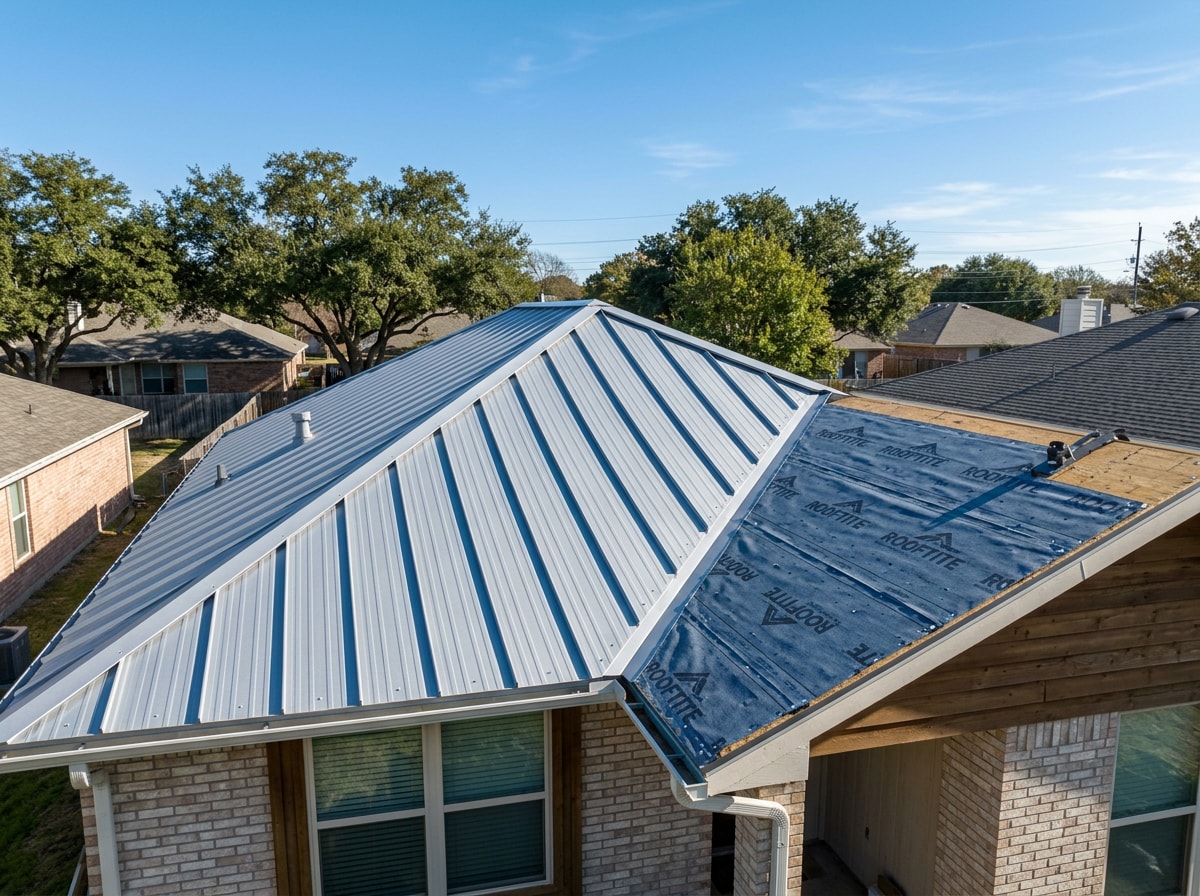
Most quotes for a metal roof in this area include one of three underlayment families, plus a high-temperature upgrade for certain panel colors.
| Underlayment Type | Best Use in The Woodlands | Heat Tolerance | Notes |
|---|---|---|---|
| Asphalt-saturated felt | Sheds, unheated outbuildings, strict budgets | Poor under metal | Dries out and cracks faster under sustained attic heat |
| Standard synthetic | Full-deck coverage on most homes | Good | Lighter, tear-resistant, easy to lap correctly |
| High-temperature synthetic | Full deck under dark or solar-ready panels | Excellent | Holds up under the highest sustained deck temperatures |
| Self-adhered (ice and water shield) | Valleys, eaves, penetrations, low-slope sections | Excellent | Fully waterproof seal around fasteners and vent pipes |
Felt is cheap and familiar, but it isn't engineered for the heat cycling a metal roof creates.
Synthetic underlayment is the modern standard. It's lighter per roll than felt, resists tearing during installation, and sheds water instead of absorbing it. Industry data backs this up: Owens Corning's ProArmor synthetic is rated up to 12 times stronger than felt and covers far more roof area per roll, which cuts down on seams and ladder trips.
High-temperature synthetic is worth the upgrade under black, dark bronze, or other heat-absorbing panel finishes, and it's increasingly standard under rooftop solar, where panels trap extra heat against the roof surface.
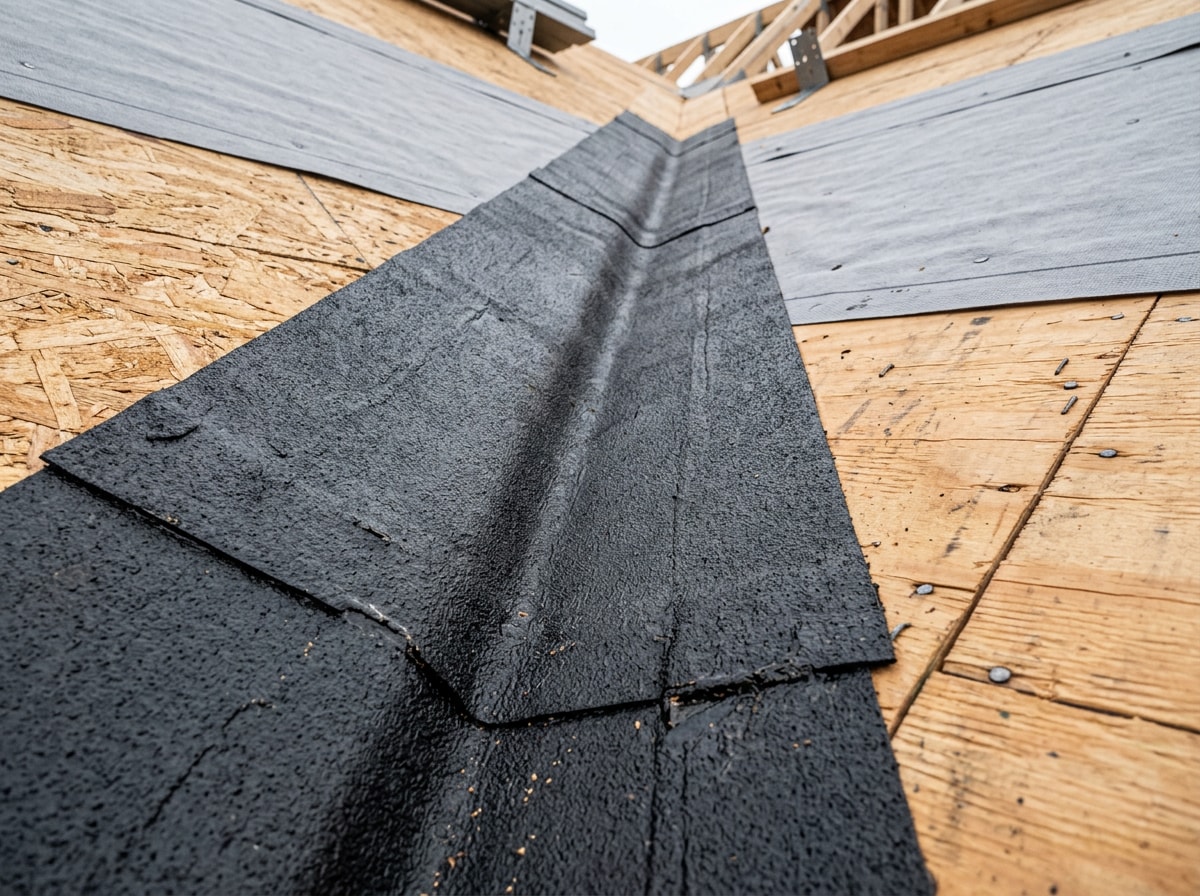
Self-adhered membranes (often called ice and water shield) handle the spots where ordinary underlayment is most likely to fail: valleys, eaves, chimney and vent penetrations, and any low-slope section.
A widely used example in this market is GAF Deck-Armor. It's engineered so it "out-breathes" typical underlayments , letting trapped moisture vapor escape while still blocking liquid water, and it can withstand extended UV exposure during construction delays without breaking down.
Before you pick a product, confirm three things with your contractor: the roof's pitch, the panel color, and whether the manufacturer requires a specific underlayment type to honor the panel warranty. If you want a second opinion on a quote, a licensed roofing contractor can walk through the spec sheet with you before any panels go up.
Standing Seam vs. Exposed-Fastener: Does the Underlayment Change?
Standing seam panels use concealed fasteners and flex more freely with temperature swings than exposed-fastener systems do. The underlayment underneath needs to tolerate that constant movement without tearing at the seams.
The typical best-practice stack for standing seam:
- Synthetic underlayment across the full deck
- Self-adhered ice and water shield at valleys, eaves, and penetrations
- High-temperature upgrade if the panels are a dark or heat-absorbing finish
Exposed-fastener panels (common on garages, barns, and some commercial buildings in this area) create more penetration points, so they benefit from a reinforced, tear-resistant synthetic paired with ice and water shield at every fastener run. Homes considering a full metal roofing installation should ask which stack their contractor is quoting, not just which panel color.
Installation Best Practices That Protect the Investment
Even a premium underlayment underperforms if it's installed wrong. A few things matter more than they get credit for:
- Lap each row correctly. Horizontal laps typically run 4 to 6 inches, but this varies by product and roof pitch, so always check the manufacturer's spec.
- Fasten with cap nails or screws, not staples.
Underlayment must be attached using metal or plastic cap nails with a nominal cap diameter of at least 1 inch, and metal caps must be at least 32-gage sheet metal. Staples tear through synthetic and felt alike under wind uplift.
- Treat valleys and penetrations as high-risk zones. This is where self-adhered membrane earns its cost.
- Match the underlayment to the panel manufacturer's warranty requirements. Most manufacturers specify this in writing, and skipping it can void coverage even if the panels themselves are flawless.
The National Roofing Contractors Association backs this approach for metal roof systems specifically, recommending that for metal shingles, polymer-modified bitumen or synthetic sheets be used rather than standard asphalt felt , and that specifiers select synthetic sheet underlayments complying with ASTM D8257 and confirm the minimum water vapor transmission rating for architectural metal panel applications.
Poor attic ventilation makes all of this worse, since trapped heat and moisture stress the underlayment from underneath as well as above. If you haven't looked at your attic airflow, our guide on roofing vents in Houston, TX covers what to check before your next roof project.
Does Underlayment Affect Your Warranty?
Yes, and this catches more homeowners off guard than it should. Most metal panel manufacturers specify synthetic or high-temperature underlayment as a condition of coverage, along with proper sealing at fasteners, edges, and seams.
Panel coating compatibility matters too. Some coatings react poorly with certain asphalt-based products over years of direct contact. Before signing a contract, ask specifically which underlayment the manufacturer's warranty requires, and get it in writing on your estimate.
Common Mistakes Homeowners Make
Choosing price over climate fit. A cheap underlayment looks fine on a quote until it fails early and the repair bill, including hidden deck damage, dwarfs the original savings.
Ignoring the heat factor entirely. Felt that performs fine in a drier, cooler region degrades fast under The Woodlands' combination of heat and humidity, often years before the metal panels themselves show wear.
Skipping the warranty check. Signing a contract without confirming underlayment requirements is how homeowners end up with a voided panel warranty they didn't know existed.
Working with a contractor who installs roofs across The Woodlands, TX and the broader Gulf Coast region day to day helps avoid all three. On tear-offs in this market, it's common to find decades-old felt that's brittle and cracked well before the metal panels above it show any real wear, which is exactly the failure pattern a correctly specified synthetic is built to avoid.
If you're comparing bids right now, the team at Optimum Roofing Solutions can walk through exactly which underlayment is written into your quote and why. Get a free estimate before you sign anything.
FAQ
Does metal roofing need underlayment?
Yes. Metal panels expand and contract with daily temperature swings, which drives condensation on the underside of the panels. Without underlayment rated for that movement and heat, moisture reaches the deck and causes rot over time.
What is the best underlayment for a metal roof in The Woodlands?
High-temperature synthetic across the full deck, with self-adhered ice and water shield at valleys, eaves, and penetrations. That combination balances cost, durability, and moisture control better than felt or standard synthetic alone in this climate.
Is there a correct installation order for metal roof underlayment?
Yes. Lock strips go on first to secure panels at eaves and rakes. Self-adhered ice and water shield goes over the lock strip at eaves and valleys, then synthetic underlayment covers the remaining deck in overlapping rows per the manufacturer's spec.
What are the different types of underlayment for metal roofs?
Synthetic sheets and self-adhered (peel-and-stick) membranes are the two types built for metal roof heat cycles. Felt can work for budget or unheated applications, but it isn't built to last under a metal roof's temperature swings.
How long does synthetic underlayment last under a metal roof?
It depends on the product grade and installation quality, but synthetic underlayment is built to outlast felt by a wide margin and is generally expected to last for the service life of the metal panels above it when installed correctly.
Can you install new metal roofing over old underlayment?
No. Underlayment should go down fresh on a clean, inspected deck during any new install or full re-roof. Reusing old underlayment skips the deck inspection that catches rot, soft spots, and prior leak damage before panels go on.
FAQ
<!-- duplicate heading guard removed -->